


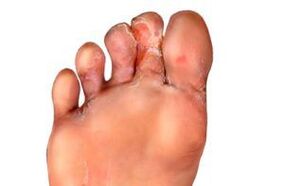
People often complain of discomfort, itching, and burning sensations in their legs.This indicates that mycosis or fungus between the toes has developed.The disease is very common, with an average of about 20 percent of people suffering from this fungus.
Fungal diseases can appear on the skin due to improper hygiene and foot care or frequent wearing of uncomfortable shoes.If you don't notice it early and start treating the fungus right away, the disease can become chronic.
Causes of fungus between toes
People with low immunity, vitamin deficiency, and metabolic disorders are prone to this disease.Additionally, fungus can develop between the toes due to small scratches on the feet and frequent sweating.After all, pathogens actively multiply in warm, high-humidity conditions.
Interdigital fungus on the feet can be contracted in a swimming pool, sauna, bath or shower (such as in a gym, hotel or while touring).Wearing tight-fitting shoes made of low-quality materials can affect the development of fungal diseases of the feet.Tight-fitting shoes are especially contraindicated in warm weather for people with foot problems.
You can even contract interdigital fungus simply from a patient's shoes.Each fungus behaves individually based on the characteristics of the body.However, there are signs that identifying fungus between the toes on your feet is not difficult.
signs of fungus on feet
- Unpleasant and painful feeling, you want to scratch your feet constantly.
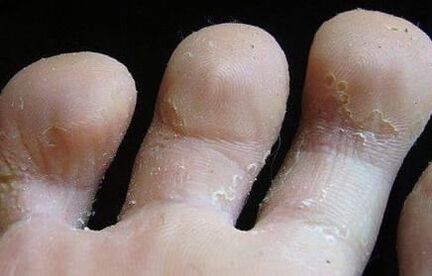
- The skin on the legs or between the toes peels and turns green or white.
- Itching, burning, severe stinging in the legs.
- The feet sweat a lot and the feet smell.
- There are small scratches and microtraumas on the skin.
- The skin on the feet becomes thicker, rougher, and more unkempt.
- The skin between the toes may begin to crack and peel.
- The nails lose their smooth structure and spots appear on them.
Fungus in the feet grows quickly and may not respond to treatment.At the same time, it does not manifest itself in any way and is in the "sleep" stage.Even with continued treatment for the fungus, relief may begin suddenly, so you'll need to monitor how comfortable your feet are in your shoes and whether your socks are putting pressure on your toes.Over time, symptoms of the fungus may worsen and the skin condition may worsen.It will begin to become rough, dry, and flaky, and the disease will progress rapidly.
Later, manifestations of the skin fungus between the toes become apparent on the nails.How did this happen?Nails become thickened, discolored, peeling, and falling off.You need to see a doctor promptly.Treatment of interdigital fungus is initiated after the acute phase of the disease.
There are different methods and options available to treat fungus between the toes.In addition to medicines, ointments and traditional medicinal formulas can also be used.
We recommend that you consult a dermatologist.Your doctor will tell you how to treat fungus between your toes, scraping your toes if necessary, and using a microscope to analyze them.Medications may be used to treat the fungus.
This treatment may be systemic.But this does not apply to people with weak livers or certain liver problems.Not suitable for young children, the elderly, mothers with infants and pregnant women.What medicine is used in this case?
The doctor prescribed antifungal medication.If you follow your doctor's advice correctly and follow the instructions, you will benefit from the treatment.
If fungus is found between the toes, treatment should not be delayed as it can spread throughout the body.
You can treat fungus between your toes using traditional methods, but do so only after seeing your doctor.Allergy to various substances cannot be excluded; this must be taken into account during treatment.When fighting interdigital fungus on the feet, you can use folk recipes containing different ingredients.
The first option is to treat it with salt and soda.These substances can be found in any household and are not difficult to obtain.How to prepare the solution?Put a tablespoon of salt and soda diluted with warm water in a container and put your feet on it for 3 minutes.Next, rinse your feet with clean water, then put on socks soaked in wine vinegar and sleep overnight.Soon, the ability to fight fungus will be significantly improved.
Here's a recipe to help get rid of the fungus: Add a tablespoon of ammonia to a cup of water.Before going to bed, compress the resulting solution, wrap it around your feet, cover it with a plastic bag and socks.Soak a soft cloth in the solution and wrap the foot containing the fungus.Repeat no more than ten times.
Treat with tar.Steam your feet with soapy water and use a pumice stone to remove flaky skin.Wipe with a towel and apply tar to the feet: skin, nails, interdigital areas, wounds.Don't wash off the tar for an hour and a half, and don't wash your feet for a few days.Repeat five times.
Chop a few peeled cloves of garlic into large chunks and soak in salt.Use it to wipe the area with fungus, but do it gently and don't be too zealous.You can chop garlic, mix it with salt, and apply it to the affected area.
Another folk remedy.Chelidonium oil from the pharmacy is suitable as a treatment for interdigital fungus.Twice a day, steam your feet with hot water mixed with club soda, then apply oil to your fingers and nails.Repeat for one month.
Treatment of interdigital mycosis
Compresses with a mixture of soda water, chamomile, nettle and butterbur, foot baths with salt water, talcum powder (to reduce sweating) - all these are ideal and acceptable methods of treating fungal diseases of the legs.
As progress is made in treating the fungus, and when symptoms no longer bother you, it's time to start a new round of treatment - consolidating the results.If you continue to remove calluses from your legs, the treatment will have positive results.
This is where fungal spores hide, causing new infections and increasing the time it takes to heal.To do this properly, you need to soak the skin on your feet and then gently scrub the areas with dead skin with a brush, which will help it slough off.
When finished, clean the brush.If you don't do anything about the existing fungus, it's likely to spread to your nails.Nails are filled with growths that change color and thicken.Fungus between the toes can peel off the skin, causing cracks that can cause pain.
If you start treating the fungus correctly, results will come quickly.For the sake of healthy leg skin, do not forget to prevent the effects of this disease.It's better to start with simple but proven measures rather than find a cure for the fungus.
Prevent fungus between fingers
Prevention includes keeping your body healthy - eating a healthy diet, stimulating your immune system and taking vitamins.
It is worth checking relatives for the presence of fungus.Familial infections are common among infected people.Pay attention to your shoes – treat them with an antifungal spray.
There is no need to use someone else's shoes.Try not to use other people's shoes and towels - this is basic hygiene and can prevent problems and consequences.
In addition to not using other people's personal hygiene products, you should not give towels, nail files, nail clippers or foot brushes to anyone.
Bring replacement shoes or purchase disposable shoes when going to the pool or sauna, as these are places where you may get a fungal infection.After the water treatment, wipe your feet, between your toes, and don't rush to put your shoes on - wait until they are completely dry.
Change your socks (also stockings, pantyhose, etc.) every day and make sure they are made from natural materials.
In hot weather, open-toed shoes should be worn to allow the skin of your feet to breathe.You can use antifungal ointment to prevent fungus between your toes.Feet should be clean and dry during use.
Pedicures are needed every two months to thoroughly remove dead skin that may contain fungus.This is best done in a salon with well-sanitized equipment.This will help repair the cured fungus
This fungus cannot tolerate prolonged heat or even five minutes of boiling.It is also not resistant to chlorine-containing chemicals – something that must be taken into consideration when processing bed linens and personal hygiene products.